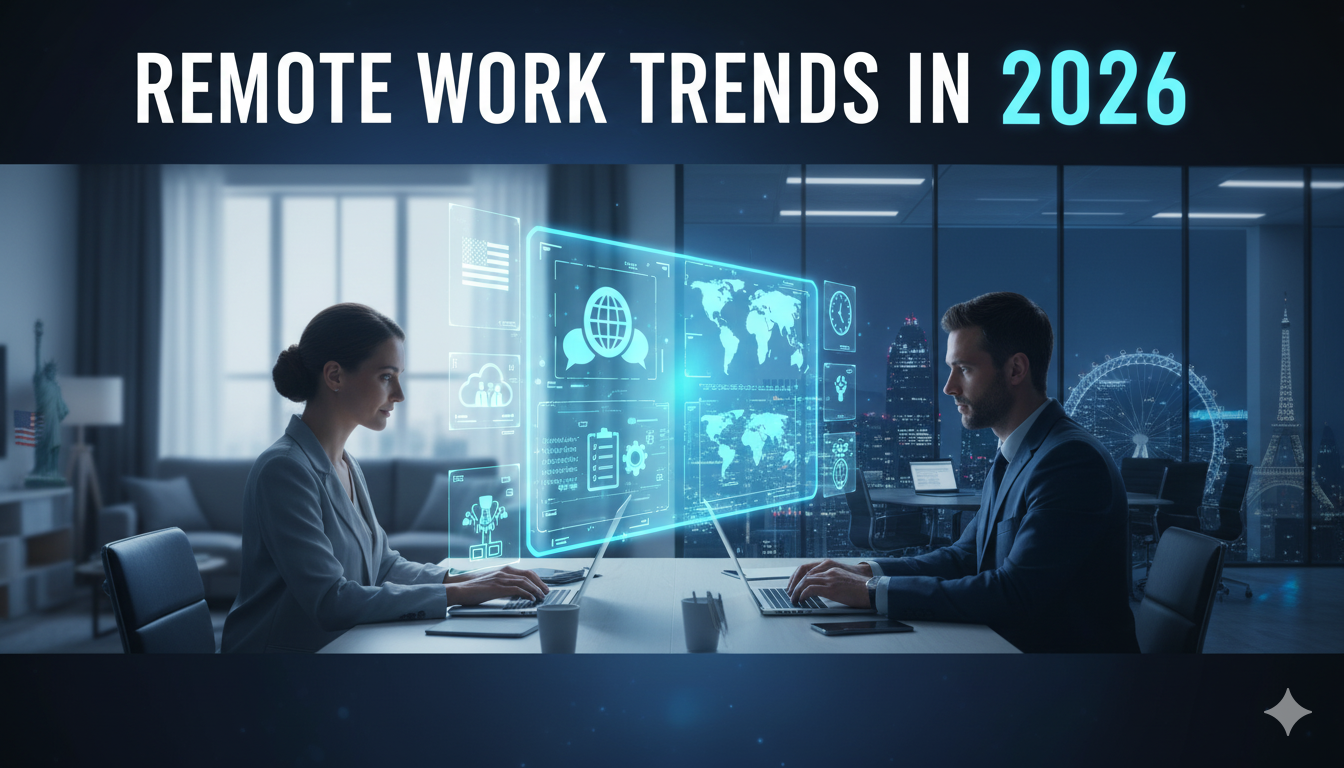
Remote Work Trends in 2026: How Tier-1 Countries Are Shaping the Future
Remote work has become a defining feature of modern employment in Tier-1 countries such as the USA, UK, Canada, Australia, and Western Europe. By 2026, the landscape of work is no longer tied to traditional office spaces. Businesses and employees are adapting to hybrid models, digital collaboration tools, and globally distributed teams.
The shift to remote work is driven by technology, employee preferences, and cost-efficiency. Understanding emerging trends is essential for professionals and companies aiming to thrive in the next phase of work.
Hybrid Work Models Dominate
In 2026, hybrid work models combining remote and in-office schedules have become the standard in Tier-1 countries. Companies are balancing flexibility with collaboration, allowing employees to work from home while maintaining occasional in-person meetings for team cohesion.
Hybrid models have been shown to improve productivity, employee satisfaction, and talent retention. They also reduce operational costs for companies by minimizing the need for large office spaces.
Global Talent Pool Access
Remote work enables organizations in Tier-1 countries to hire talent globally. Employers can recruit highly specialized professionals without geographic limitations, resulting in higher-quality teams and innovation.
For employees, this creates opportunities to work with international clients, earn competitive wages, and gain diverse experience without relocating.
Advanced Collaboration Tools
By 2026, collaboration software has evolved to support complex workflows across multiple time zones. Platforms such as Microsoft Teams, Zoom, Slack, and cloud-based project management tools are now integrated with AI features for scheduling, document editing, and real-time analytics.
Employees are increasingly skilled at leveraging these tools to maintain productivity, streamline communication, and reduce misalignment in distributed teams.
Work-Life Balance and Employee Wellbeing
One of the biggest benefits of remote work is improved work-life balance. Tier-1 countries are prioritizing employee wellbeing with flexible schedules, mental health programs, and reduced commuting stress.
Organizations that actively monitor employee burnout, offer wellness resources, and support flexible hours have reported higher engagement and long-term retention.
Security and Data Privacy
Remote work brings cybersecurity challenges. Tier-1 employers are investing in VPNs, secure cloud storage, multi-factor authentication, and employee training to protect sensitive information.
By 2026, data privacy and compliance are critical considerations for distributed teams, particularly in industries such as finance, healthcare, and government services.
Freelancers and Gig Economy Integration
The remote work revolution in Tier-1 countries has blurred the line between full-time employees and freelancers. Many companies now combine permanent staff with high-skilled freelancers for project-based work.
This hybrid workforce strategy provides flexibility, access to specialized skills, and cost-effectiveness while allowing freelancers to participate in large-scale projects with premium compensation.
Challenges of Remote Work
While remote work has many benefits, it is not without challenges:
- Maintaining team cohesion and culture
- Time zone coordination across global teams
- Overwork due to blurred home-office boundaries
- Technology dependency and potential burnout
Tier-1 companies are addressing these challenges by defining clear remote policies, providing resources for remote collaboration, and promoting mental health awareness.
Future Outlook
By 2026, remote work will continue to expand, with technology and organizational strategy evolving together. AI-assisted collaboration, virtual reality meetings, and global talent marketplaces are expected to redefine how work is executed.
Employees with digital literacy, self-discipline, and remote collaboration skills will have a competitive edge in Tier-1 countries. Companies that adopt hybrid and flexible models will attract top talent while optimizing costs and productivity.
Conclusion
Remote work in 2026 is no longer a temporary trend but a permanent transformation in Tier-1 countries. Hybrid models, advanced collaboration tools, employee wellbeing programs, and global talent integration are shaping a flexible and productive workforce.
Adapting to these trends will be crucial for both professionals and organizations to succeed in the evolving landscape of work.
Suggested Image Alt Text: Remote work trends in Tier-1 countries 2026
Focus Keyword: Remote Work Trends in 2026