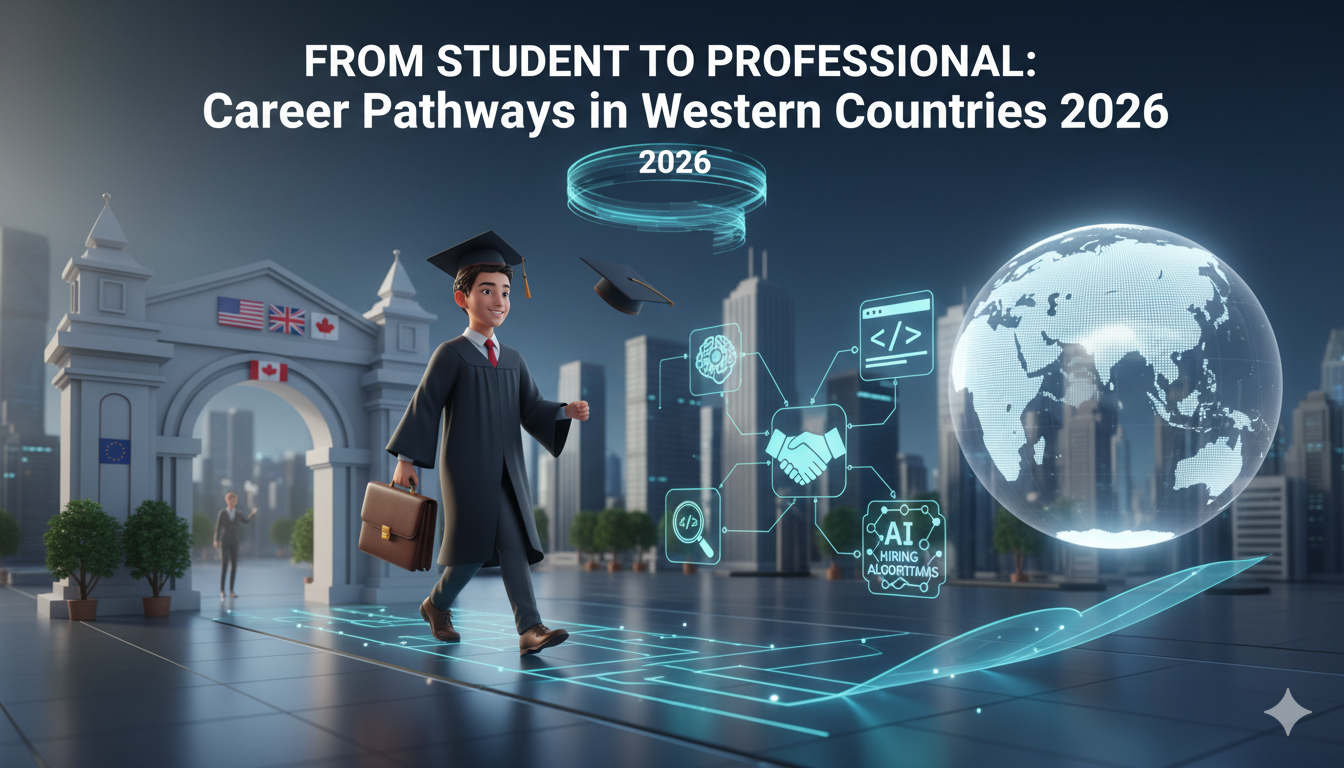
From Student to Professional: Career Pathways in Western Countries 2026
In 2026, the journey from student life to professional employment in Western countries has become more structured, competitive, and technology-driven than ever before. For students studying in the USA, UK, Canada, and Europe, earning a degree is no longer enough. Employers now expect graduates to arrive with practical skills, adaptability, and a clear understanding of modern workplace demands.
Economic uncertainty, artificial intelligence, and evolving immigration policies have reshaped traditional career pathways. Students who understand these changes early are far more likely to secure stable employment and long-term career growth in Western economies.
The Changing Education-to-Career Landscape
Western education systems in 2026 focus heavily on employability. Universities increasingly collaborate with industries to align academic programs with real-world needs. Degrees in technology, healthcare, engineering, business, and data-related fields remain highly valued, but interdisciplinary skills are becoming equally important.
Employers no longer hire based solely on academic results. Instead, they assess how well graduates can apply knowledge, solve problems, and adapt to fast-changing environments.
Career Planning Starts Early
Successful students in Western countries begin career planning well before graduation. By 2026, employers expect graduates to show evidence of planning, such as relevant coursework, internships, certifications, and extracurricular involvement.
Early career planning allows students to identify in-demand skills, choose strategic electives, and avoid skill gaps that could delay employment after graduation.
Internships and Industry Exposure
Internships remain one of the strongest bridges between education and employment. In 2026, most employers in Western countries prefer graduates who already understand workplace culture, professional communication, and basic industry workflows.
Internships, cooperative education programs, and part-time professional roles allow students to gain local experience. Many organizations use internships as extended evaluation periods, offering full-time roles to high-performing interns.
Skills That Matter in 2026
The modern job market demands more than subject knowledge. Students transitioning into professional roles must develop a balanced skill set that combines technical ability with human-centered skills.
- Digital and AI literacy
- Critical thinking and analytical skills
- Professional communication
- Team collaboration in diverse environments
- Adaptability and continuous learning
Graduates who demonstrate the ability to learn new tools quickly are more attractive to employers than those with static skill sets.
The Role of AI in Graduate Hiring
By 2026, artificial intelligence plays a major role in recruitment across Western countries. AI-powered systems screen resumes, rank candidates, and analyze skill compatibility. This has made personal branding, digital portfolios, and well-structured resumes more important than ever.
Students who understand how hiring technology works and present their skills clearly have a higher chance of passing automated screening systems.
Networking and Professional Visibility
Networking remains a powerful tool for career growth. In Western countries, many graduate roles are filled through referrals, campus recruitment programs, and professional connections.
Students are encouraged to build relationships with professors, alumni, mentors, and industry professionals. Participation in career fairs, workshops, and professional events significantly improves employment prospects.
Work Visas and Post-Study Opportunities
For international students, legal work pathways are a critical factor in career planning. In 2026, Western countries continue to offer post-study work options, but competition for sponsored roles is increasing.
Graduates must secure relevant employment within defined timeframes and demonstrate value to employers willing to support long-term work authorization. Choosing in-demand fields and gaining local experience improves visa outcomes.
Common Challenges After Graduation
Despite preparation, many graduates face challenges when entering the workforce. Competition, economic fluctuations, and visa limitations can delay career progression.
- Limited entry-level positions
- High competition from local and international candidates
- Employer hesitation around visa sponsorship
- Mismatch between academic learning and job expectations
Graduates who remain flexible, accept short-term or contract roles, and continue learning often achieve long-term success.
Building Long-Term Careers in Western Countries
Career growth in 2026 is rarely linear. Professionals may change roles, industries, or locations as they gain experience. Western employers value employees who invest in continuous professional development and adapt to technological change.
Success depends on persistence, strategic decision-making, and the ability to evolve alongside the job market.
Conclusion
In 2026, the transition from student to professional in Western countries requires more than a degree. Early planning, skill development, internships, and adaptability to AI-driven hiring systems define success.
Students who understand these realities and prepare strategically can build stable, rewarding careers and navigate the competitive Western job market with confidence.